https://www.washingtonpost.com/opinions/2026/02/15/waymo-markey-autonomous-vehicles-safety-unions/
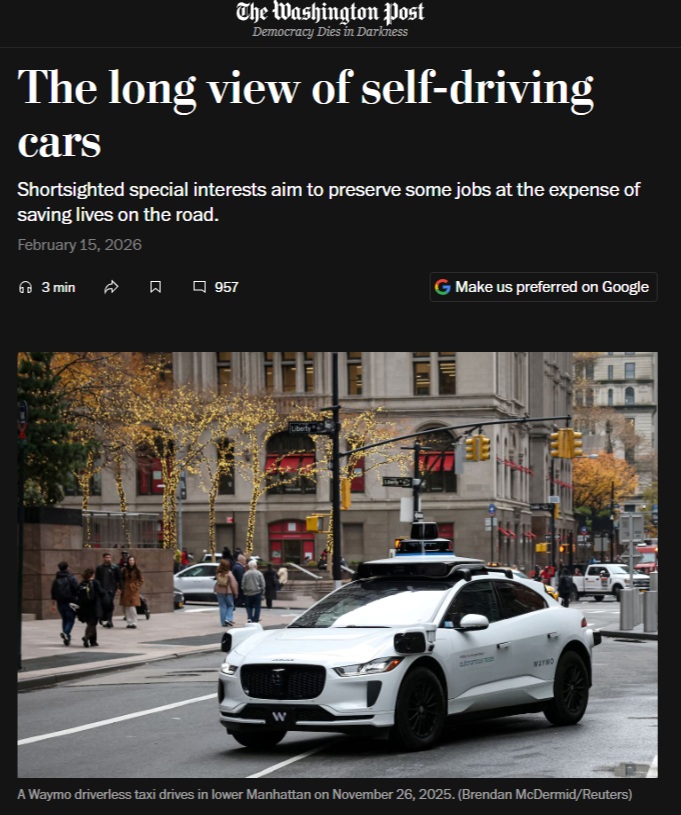
근시안적인 특수 이해집단이 도로에서 생명을 구하는 대신 일부 일자리를 지키는 데 집착하고 있다.
자율주행차는 인상적인 안전 기록을 쌓아가고 있으며, 광범위하게 보급될 경우 많은 생명을 구할 수 있다. 그런데도 일부 정치인들은 이러한 진전을 가로막기 위한 핑계를 끝없이 찾아내는 듯하다. 최근 Waymo에 대해 제기된 Edward J. Markey(민주·매사추세츠)의 불만이 그 사례다.
이 자율주행 기업은 현재 주당 약 40만 건의 로보택시 운행을 제공하고 있으며, 미국 내 수천 명의 직원을 두고 있다. 또한 복잡한 상황에서 차량을 지원하기 위해 필리핀의 원격 인력에 의존하고 있다.
해외 콜센터와 관련해 보안이나 문화적 차이에 대한 합리적 우려가 있을 수는 있다. 그러나 회사 측은 이 운영자들이 실제로 차량을 운전하지는 않는다고 설명한다. 대신 “차량이 멈춰 서 있거나 상황 해석에 도움이 필요한 경우 등 예외적 상황(edge case)에서만 개입해 지침을 제공한다”고, Driverless Digest는 전했다.
마키 의원은 보안이나 문화 문제에는 비교적 가볍게 언급했을 뿐이다. 그의 진짜 불만은 이것이다. “웨이모는 성실하게 일하는 택시 및 라이드셰어 운전자들의 일자리를 대체하려 하고 있다.” 참고로 전미 트럭노조(Teamsters)는 매사추세츠에서 자율주행차를 금지하기 위해 강도 높은 노력을 기울이고 있으며, 마키 의원은 Seth Moulton 하원의원으로부터 당내 경선 도전을 받고 있다.
대부분의 인간 운전자가 자율주행차로 대체되는 세상은 택시 기사나 트럭 운전자들에게 분명 혼란을 초래할 것이다. 그러나 이러한 변화가 가져올 대규모 성장과 생산성 도약은 국가 전체를 더 풍요롭게 만들 것이다. 더 중요한 점은, 매년 미국 도로에서 수만 명이 목숨을 잃는 비극을 크게 줄일 수 있다는 것이다.
한 사례를 보자. 1월 23일 캘리포니아주 Santa Monica에서 한 어린이가 웨이모 무인 차량 앞으로 뛰어들었다. 차량은 시속 17마일에서 6마일로 스스로 감속했고, 그 결과 부상은 경미한 수준에 그쳤다. 회사에 따르면 동료 검토(peer-reviewed)를 거친 충돌 회피 모델 분석 결과, 인간 운전자였다면 여전히 시속 14마일로 주행 중이었을 가능성이 높으며, 이는 웨이모가 아이의 생명을 구했을 수 있음을 시사한다.
National Highway Traffic Safety Administration(NHTSA)은 이 사건을 조사 중이며, 향후 더 명확한 사실관계가 드러날 수 있다. 그러나 이런 사건들은 맥락 속에서 바라볼 필요가 있다. 웨이모 차량도 일부 사고에 연루된 적은 있지만, 지금까지는 인간 운전자보다 사고 빈도가 더 낮은 것으로 보인다.
NHTSA 추정에 따르면, 인간 운전자는 약 1억 마일 주행당 1건의 사망 사고를 낸다. 2025년 9월 기준 웨이모 무인 차량은 1억 2,700만 마일 이상 승객을 태우고 운행했으며, 회사 과실로 인한 사망 사고는 한 건도 없었다. 또한 회사 데이터에 따르면, 중상자를 초래하는 비치명적 충돌 역시 약 90% 감소한 것으로 나타난다.
이 기술을 개선하고 대중이 더 폭넓은 도입을 지지하도록 설득하는 데에는 데이터와 투명성이 핵심이 될 것이다. 동시에 민간 기업 간의 건전한 경쟁은 수십억 달러 규모의 투자를 바탕으로 더 많은 시험과 개발을 가능하게 하며 자율주행 기술을 전진시키고 있다. 웨이모의 경쟁사로는 Tesla와 Amazon(창업자 Jeff Bezos) 등이 있다.
진짜 질문은 무인 차량이 한 번이라도 실수를 했는지가 아니다. 인간 운전자보다 그런 실수를 더 적게 하느냐가 핵심이다. 지금까지의 데이터는 자율주행이 상당한 개선임을 시사하며, 웨이모가 운영 중인 도시의 소비자들 역시 이를 크게 우려하는 모습은 아니다.
이 분야의 가장 큰 위험은 기술적 문제가 아니라 정치적 문제일지 모른다.
The long view of self-driving cars
Shortsighted special interests aim to preserve some jobs at the expense of saving lives on the road.
Self-driving cars are racking up an impressive safety record, and they could save many lives when widely deployed. Yet some politicians seem to never run out of excuses to stop this progress. Consider a recent complaint about Waymo from Sen. Edward J. Markey (D-Massachusetts).
The autonomous vehicle firm is currently serving around 400,000 robotaxi rides per week and has thousands of employees in the United States. It also relies on remote personnel in the Philippines to guide Waymos in tricky situations.
While there may be reasonable concerns about security and cultural mismatch with foreign call centers, the company says the operators don’t actually drive the cars. Instead, “They step in only during edge cases to provide guidance, such as when a vehicle is stuck or needs help interpreting a situation,” according to Driverless Digest.
Markey dwelt but lightly on security or cultural issues. His real complaint: “Waymo is trying to replace the jobs of hardworking taxi and rideshare drivers.” By the way, the Teamsters are making strenuous efforts to get self-driving cars banned in Massachusetts, and Markey is facing a primary challenge from Rep. Seth Moulton.
A world where most human drivers are replaced with autonomous vehicles would indeed be disruptive for taxi drivers or truckers, but the massive leaps in growth and productivity enabled by the change would make the entire country better off. More importantly, potentially tens of thousands of people would no longer be killed on America’s roads every year.
Take one example. On Jan. 23, a child stepped in front of a Waymo driverless vehicle in Santa Monica, California, but the vehicle braked itself from 17 mph to 6 mph, causing only minor injuries. The company says that its peer-reviewed collision-avoidance model indicates a human driver would still have been traveling 14 mph, meaning the Waymo may have saved the child’s life.
The National Highway Traffic Safety Administration is investigating, and a fuller picture may emerge. Yet it’s important to put such incidents in context. While Waymos have been involved in some accidents, so far they appear to get in fewer than human drivers.
People behind the wheel have roughly one fatality for every 100 million miles traveled, the NHTSA estimates. As of September 2025, Waymo driverless vehicles had carried passengers for more than 127 million miles, but Waymo has not been at fault in any fatal crashes. The company’s data shows that non-fatal collisions were also less common, with a roughly 90 percent reduction in crashes causing serious injuries.
Data and transparency will be key to refining this technology and convincing the public to support broader adoption. Yet healthy competition from private firms is pushing self-driving cars forward, with multibillion-dollar investments allowing for more testing. Waymo competitors include Tesla and Amazon, which was founded by Post owner Jeff Bezos.
The right question is not whether driverless vehicles have ever made a mistake; it’s whether they make fewer such mistakes than human drivers. Thus far the data suggests that self-driving is a substantial improvement, and consumers in the cities where Waymo operates don’t seem deterred.
The greatest risk to moving forward here isn’t technological but political.
'로보택시' 카테고리의 다른 글
| 26.02.21 테슬라 vs 웨이모, 캘리포니아 규제를 두고 장외 전쟁 (0) | 2026.02.22 |
|---|---|
| 26.02.20 웨이모 6세대 자율주행 시스템 상용화 外 (0) | 2026.02.20 |
| 26.02.06 美상원 공청회 후기, "자율주행, 묻고 더블로 가!" (0) | 2026.02.06 |
| 26.01.31 도로교통법, 로보택시 상용화에 암초가 될까? (0) | 2026.01.31 |
| 26.01.17 CES 2026이 보여준 자율주행의 기회와 냉정한 현실 (1) | 2026.01.17 |


